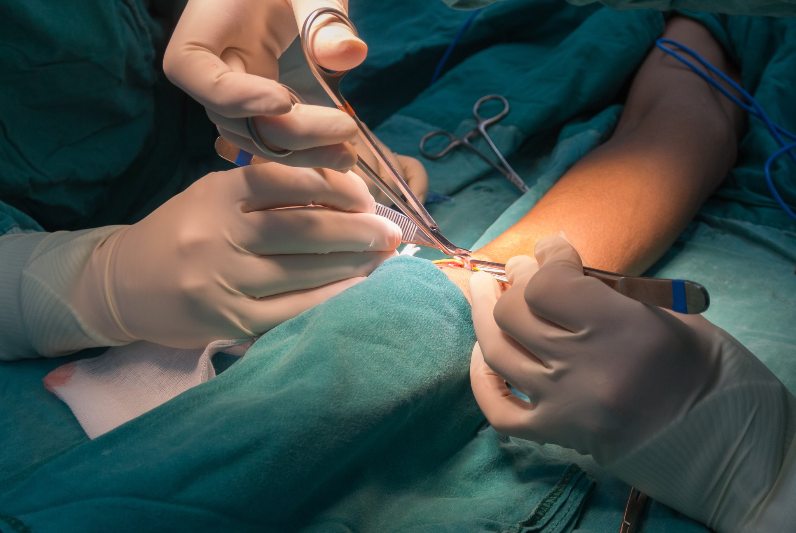
AV Fistula Surgery
An Arteriovenous (AV) fistula is a surgically created
connection between an artery and a vein, most commonly in the
arm. It provides reliable vascular access for patients who
require long-term hemodialysis. A well-functioning fistula
allows repeated access to the bloodstream during dialysis
treatment.
Dr. Rahul Singh provides specialized vascular evaluation and
surgical care for patients requiring AV fistula creation. The
treatment approach focuses on assessing the patient's blood
vessels, selecting a suitable site for access and creating a
durable vascular connection appropriate for the individual's
dialysis requirements.
Specialized Vascular Access for Dialysis
Successful AV fistula creation requires careful assessment
of the arteries and veins and appropriate surgical
planning. After the procedure, the fistula also requires
regular monitoring to ensure that blood flow remains
adequate and the access is functioning properly. Early
evaluation of access-related problems can help support
long-term dialysis care.
Careful vascular assessment and appropriate surgical
planning can help create reliable access for long-term
hemodialysis.
Frequently Asked Questions
AV fistula surgery is an important part of long-term
dialysis care. Understanding the procedure, preparation and
ongoing care can help patients protect their vascular access
and recognize problems that may require medical attention.
-
What is an AV fistula?
An AV fistula is a surgically created connection
between an artery and a vein. It is commonly created
in the arm and provides vascular access for
hemodialysis by allowing repeated access to the
bloodstream.
-
Why is an AV fistula used for dialysis?
An AV fistula is commonly used for long-term
hemodialysis because it can provide durable vascular
access when it develops properly. It is designed to
provide the blood flow needed for repeated dialysis
treatments.
-
How is AV fistula surgery performed?
AV fistula surgery involves connecting a suitable
artery and vein, usually in the arm, to create a
vascular access site. Before surgery, the blood
vessels are evaluated to determine an appropriate
location and surgical approach.
-
How should an AV fistula be cared for after surgery?
The fistula should be protected and monitored
regularly. Patients are generally advised to observe
the access for changes in swelling, pain, redness,
bleeding or blood flow. The dialysis and vascular
care teams can provide specific instructions for
protecting and monitoring the fistula.