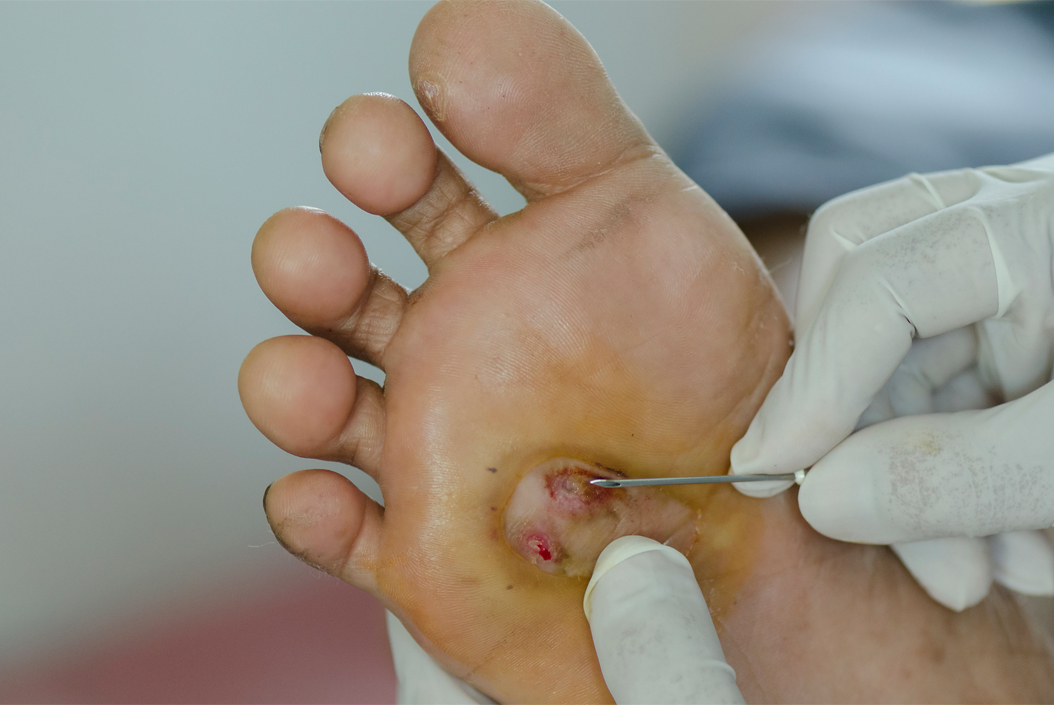
Diabetic Foot Care
Diabetes can affect the blood vessels and nerves that supply
the feet, increasing the risk of foot wounds, infections, poor
healing and other serious complications. Reduced blood
circulation can make it difficult for a foot wound to heal and
may increase the risk of tissue damage if treatment is
delayed.
Dr. Rahul Singh provides specialized vascular assessment and
diabetic foot care focused on identifying circulation
problems, evaluating wounds and supporting appropriate
treatment. Early vascular evaluation can be important when a
diabetic patient develops persistent foot pain, ulcers,
discoloration, swelling or a wound that is not healing
properly.
Specialized Diabetic Foot & Vascular Care
Diabetic foot problems often require careful evaluation of
blood circulation, wound condition, infection and the
overall health of the foot. Our approach focuses on
identifying vascular problems early and providing an
appropriate treatment plan based on the patient's
individual condition.
Early attention to diabetic foot problems can help protect
healthy tissue, support wound healing and reduce the risk
of serious complications.
Frequently Asked Questions
Understanding diabetic foot problems and their relationship
with blood circulation can help patients seek appropriate
care at the right time. If you notice a non-healing wound,
change in foot colour, persistent pain or other unusual
symptoms, a vascular evaluation may be recommended.
-
Why is diabetic foot care important?
Diabetes can affect nerves and blood circulation in
the feet. This can make injuries harder to notice
and wounds more difficult to heal. Regular foot care
and timely medical evaluation can help identify
problems early and reduce the risk of complications.
-
What are warning signs of a diabetic foot problem?
Warning signs may include a wound or ulcer that does
not heal, redness, swelling, increasing pain,
changes in skin colour or temperature, discharge,
infection or unusual numbness. Any concerning foot
wound in a person with diabetes should be evaluated
promptly.
-
When should a diabetic patient see a vascular surgeon?
A vascular consultation may be appropriate when a
diabetic patient has a non-healing foot wound,
reduced circulation, persistent foot pain, skin
discoloration, tissue damage or other signs
suggesting a blood-flow problem. Early assessment
can help determine the appropriate treatment
approach.
-
How is diabetic foot circulation evaluated?
Evaluation may include a clinical examination of the
foot, assessment of pulses and circulation, and
vascular investigations such as Doppler or other
imaging studies when clinically required. The
specific tests depend on the patient's symptoms and
examination findings.